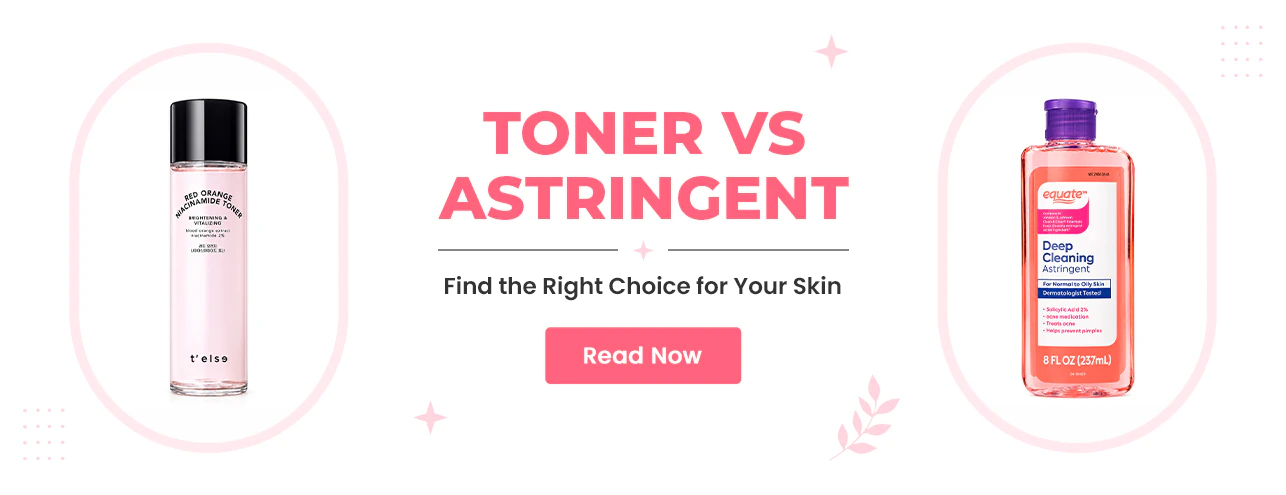
Choosing the right liquid step after cleansing can transform your daily skincare routine. However, many people get confused when comparing toner vs astringent and often use the terms interchangeably. Although both are commonly used liquid skincare products applied right after cleansing, their uses and ingredients differ greatly.
Understanding the difference between toner and astringent is important for having a healthy moisture barrier. Using the wrong skincare products can cause discomfort, including dryness or irritation. In this article, you will learn how each skincare product works, how to choose the right product for your skin type, and how to buy genuine products on Ubuy UK.

After cleansing, your skin’s pH balance may be disturbed for a while. Traditional cleansers strip important lipids along with dirt, leaving your skin feeling tight. Liquid treatments bridge cleansing and moisturisation, making your stratum corneum more receptive to serums and creams.
Active agents in liquid formulations target quick penetration:
Hydrating & Soothing Agents: Agents such as hyaluronic acid, glycerin, and rose water help hydrate the upper skin layers without blocking the pores.
Exfoliating Acids: These include substances like glycolic acid or polyhydroxy acids that remove dead skin cells from the surface.
Astringent Compounds: Natural extracts such as witch hazel, tea tree, or products containing astringent acids may temporarily reduce the appearance of oiliness and minimise shine.
Botanical Extracts: Products such as a natural green tea face toner provide anti-inflammatory properties and help soothe sensitive skin.
Skincare liquids require understanding what each one does for the skin. Astringents in cosmetics have traditionally used high amounts of denatured alcohol; however, modern astringents can use gentler botanical astringents.

Hydrating toners are specifically formulated to restore moisture, reduce irritation, and strengthen the skin barrier. They are either water- or milk-based and have humectants that attract moisture into the skin.

Exfoliating treatments work to remove sebum build-up along with dead skin cells to achieve a glowing face.
Astringent face toners or astringents themselves are products formulated especially for the removal of excessive oils from the face and temporarily tightening the skin’s appearance. Traditional formulas often feature alcohol; their modern-day counterparts frequently opt for alcohol-free bases powered by witch hazel, salicylic acid, or an astringent calamine base instead for reduction of oiliness without irritation.
Choosing whether to use a regular hydrating toner or a clarifying astringent skin toner is based on recognising your skin problems and surface oil content.
While choosing international skincare brands, it is necessary to have safe formulations and a high level of quality assurance in order to protect the health of your skin.
| Brand Name | Primary Focus | Key Ingredients | Skin Type Suitability |
| The Ordinary | Direct, targeted chemical exfoliation | 7% Glycolic Acid, Amino Acids, Aloe Vera | Oily, combination, and dull skin |
| Beauty of Joseon | Traditional herbal hydration & calming | Rice Extract/Bran Water, Panthenol, Hyaluronic Acid | Dry, sensitive, and normal skin |
| Glow Recipe | Pore refinement & gentle hydration | PHA, BHA, Watermelon Extract | Oily, combination, and enlarged pores |
| BYOMA | Skin barrier restoration | Barrier Lipid Complex (Ceramides), Cica, Polyglutamic Acid | Sensitive, dehydrated, and dry skin |
Insight into the discussion regarding toner vs astringent will assist you in making sound decisions for the betterment of your skin. Toners have mostly been known to be hydrating and balancing agents for the skin and can be used on all types of skin, while astringents are skin-tightening products used especially for controlling excessive shine on the face.
Are you ready to make your current skincare regimen better? Discover the huge range of high-quality, genuine skincare products at Ubuy UK and find your ideal match right now.
You can buy your favourite international toners and astringents from a huge variety of beauty brands available on Ubuy UK, right from the comfort of your home. Do visit the product page to get the complete details about the brand, shipping cost, and import duties.
Toners are generally skin preparation products that can be hydrating or exfoliating and provide moisture after washing your face. Astringents, on the other hand, are more potent products that contain ingredients like witch hazel or alcohol and help degrease and temporarily constrict the look of the skin.
Oily or breakout-prone skin types benefit greatly from either an oil-controlling toner or a modern, alcohol-free astringent. Look for targeted ingredients like salicylic acid (BHA), witch hazel, or niacinamide to manage excess sebum and clear out congested pores. It is best to avoid traditional astringents with high concentrations of denatured alcohol, as stripping the skin can cause rebound oiliness and irritation.
Start with your main skin concern:
• Dry skin: toners with ceramides, glycerin, or hyaluronic acid
• Dull skin: gentle AHA toners, such as lactic or glycolic acid
• Normal skin: light, hydrating toners, for example with rice or rose extracts
• Oily skin: BHA or oil-balancing astringent toners
• Sensitive skin: soothing, fragrance-free toners with centella or aloe
In general, using a powerful astringent and a toner that exfoliates the skin should be avoided, since it may cause problems with your skin barrier. For people with combination skin, it would be best to use a moisturising toner during the daytime and an astringent for oily areas at night.
Search for humectants including glycerin and hyaluronic acid for moisture; aloe and green tea to soothe irritated skin; and mild acids such as lactic acid, salicylic acid, or PHAs to improve skin texture and appearance of pores.
Hydrating toners can be applied twice a day after cleansing in the morning and evening. Astringent and exfoliating toners must be applied gradually, starting from 2-3 times a week. If irritation, redness, or peeling occurs, stop using toners.

Ubuy content team consist of various writers specializing in different niches. They write blogs about different topics ranging from science, human relationships to the latest technology to share their thoughts, ideas and knowledge with the world.

Get every Newsletter